

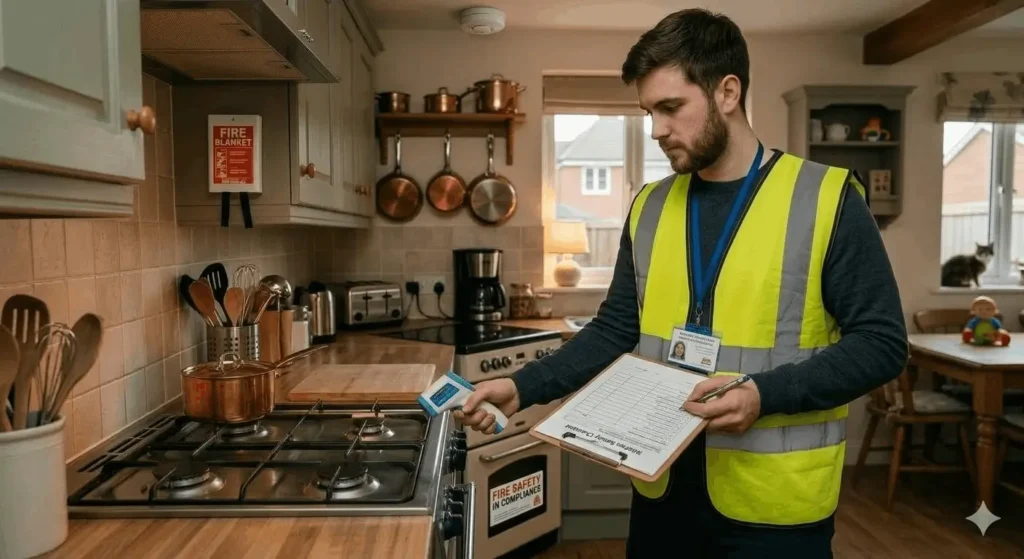
A fire risk assessment is a practical check of your building, the people inside, and the things that could start or spread a fire. If you own, manage, or control a workplace, a rental home, or a shared building, you may need one. This check helps protect people, the property, and your daily work.
It helps you find risks early, fix weak spots, and lower the chance of hurts, damage, and costly stops in your day. Below, you will see the main steps, your legal duties, common fire hazards, and how often you should check your Fire Risk Assessment plan again.
What a fire risk assessment is and who is responsible for it
A fire risk assessment is a careful look at a building, the people inside, and anything that could start a fire. The job usually belongs to the responsible person. Depending on the building, this could be a boss, a shop owner, a landlord, a manager, or the person in control of the space. In buildings where many people live or work, more than one person might have this job. It is smart to check the fire safety rules for your city because the law can change from place to place.
The main goal: finding risks and reducing them
A good Fire Risk Assessment check looks at three things:
- Causes: Like broken wires, hot tools, smoking spots, or messy storage.
- People: Like workers, guests, builders, residents, and anyone who needs extra help.
- Controls: Like loud alarms, clear paths to the door, better cleaning, training for staff, and safe storage.
The last step is most crucial. Not every little risk needs to be removed. Sensible actions are all you need to take to avoid a little issue from becoming a major blaze. A fire risk assessment should result in action rather than just a signed form. The risk is simple to see, for instance, in a room full of cardboard close to a power box. The fix is also easy, just rearrange the boxes, maintain the space tidy, and often inspect it. If a person works alone late at night, they should need better lighting, and a clear strategy to get them out might be required. This procedure is like a building health examination. Before a genuine emergency, you find the flaws and correct them.
Buildings and situations that usually need extra care
Some locations need more investigation as a fire could start readily, the design is difficult to quit, or the inhabitants require more help. Even if an office looks to be safe, having too many plugs in one socket, large computer rooms, kitchens, and blocked doors can still be dangerous. Especially if back rooms are crowded, and consumers are unfamiliar with where the exits are, businesses have comparable difficulties.
Big warehouses need extra care because they have long paths to the doors. A big warehouse can hold many things that can lead to a small spark becoming a big disaster. Danger can be unidentified because of high shelves. And narrow paths can slow people down. If paper, fuel, or chemicals are stored poorly, a fire can move very fast.
Other buildings are even more sensitive:
- Apartment blocks, schools, and care homes: People might be asleep, very young, or unable to move fast.
- Older buildings: They might have old wires, wood frames, or strange paths that were not made for modern safety.
Every building works differently. A school during the day is busy with kids, but at night it might host a meeting for adults. A quiet office can become dangerous if one room is turned into a storage spot. The person in charge must look at daily life and who is there and what could stop them from getting out safely.
How to carry out a fire risk assessment step by step
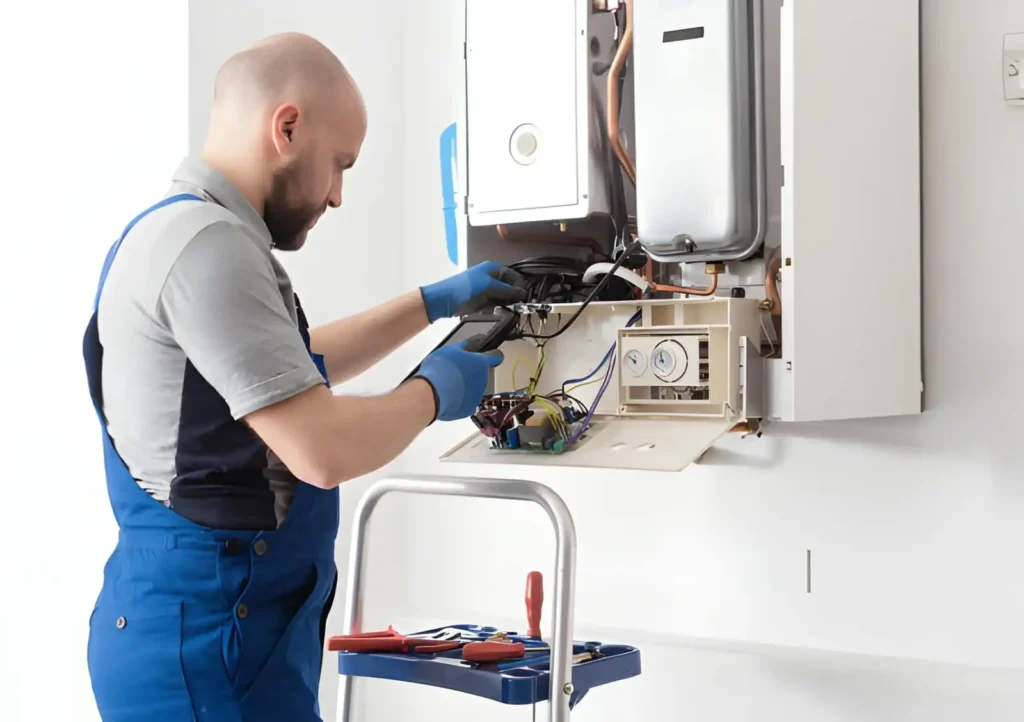
This fire risk assessment demands a physical assessment, not a virtual inspection. Book a qualified engineer, then that engineer visits the building and inspects it thoroughly. He checks each corner of the building and each room to identify the hidden dangerous spots that may cause fire. Fire Risk Assessment checks the safety tools you already have and fixes any gaps. Keep it simple.
Start by identifying fire hazards
First, look for things that could start a fire. Common sparks of broken wires, too many plugs in one spot, space heaters, cooking tools, and smoking can cause a fire. Even a tiny damaged wire behind a desk can start a fire. Next, look for things that feed a fire. Paper, boxes, furniture, cleaning liquids, and chemicals can all lead to a small spark into a huge disaster. If a building is messy, fire can spread much faster. Fire needs oxygen to grow. Open doors, fans, and gas tanks can make a fire grow very fast. In some workplaces, gas tanks and chemicals need much more care than a normal office. Scan each room:
- Find the sparks.
- Find the fuel nearby.
- Check if the air could help a fire spread.
- Write down any hazard that looks dangerous.
Look at who could be at risk and why
This includes workers, guests, and people living there. Consider how quickly they might hear an alarm and leave. Some people need more assistance, including seniors, children, those unable to move swiftly, or someone unfamiliar with the building. A visitor or a guest may not know where the closest door is. A building might be easy to leave at noon, but much harder at midnight when people are asleep or alone.
Evaluate the risk level and existing safety measures
Now, look at the safety tools you already have. Can people get out fast? Check the halls, stairs, and doors. If a path is blocked or dark, the risk is very high. Check your equipment that can cause fire. Observe fire extinguishers, alarms, smoke sensors, emergency lights, indicators, and fire doors. Should the electricity fail, fire doors have to shut firmly, alarms have to be audible enough for everyone to hear, and lights have to operate. Training is also rather important. Everyone ought to be informed about the sound of the alarm and where to go.
Record findings and create an action plan
Write down what you found using simple words. The goal is a record that helps people take action. Your plan should be easy: list what needs fixing, how urgent it is, who will do it, and the date it must be finished. A good plan shows:
- The problem found.
- The area where it is.
- Who is at risk.
- The fix needed.
- When it must be done.
Some jobs are quick, like putting up a sign. Others might take more time and money, like fixing a staircase. Both are important, but they might have different deadlines.
Review the assessment when things change
A fire risk assessment is never truly finished. Buildings and people change. If you change the building but do not update the plan, the plan becomes useless. Review your plan if:
- You change the layout or move walls.
- You get new machines or more people.
- You change what the building is used for.
- There is a near miss or a small fire.
- There is a lot of new staff who do not know the rules.
Fire safety is always moving, so your plan must keep up. Re-check your plan whenever the building stops working the way it did when you first looked at it.
Common fire safety problems that assessments often uncover
Most checks find simple problems that people stop noticing. A messy hall or a fire door propped open might seem small, but these are exactly what make a fire dangerous. Usually, it is a chain of small problems that leads to a big disaster.
Blocked exits, poor storage, and bad housekeeping
This is a very common problem. A few boxes in a hall or a chair near a door can stop people from leaving. In a fire, people do not move calmly. They rush and get scared. If an exit is locked or blocked, those lost seconds can cost lives. Messy storage also adds fuel. Paper and cardboard can help a fire spread if they are near heaters or power boxes. Clutter does not just get in the way; it helps the fire grow.
Missing maintenance on alarms, extinguishers, and fire doors
Safety gear only helps if it works. A silent alarm or a broken fire door gives people a false sense of safety. If you miss your tests, faults can hide in the system. A smoke sensor might fail, or an alarm might not be loud enough. Fire doors are vital because they stop smoke and heat. They only work if they close all the way. Doors frequently set open with wedges or seals missing strike experts.
Concluson
A propped-open door enables the fire to spread straight through, much like a hole in a fence. Furthermore, extinguishers have to be extinguishers. They are worthless if they are elderly, damaged, or of the incorrect kind. This counts most at the beginning of a little fire. Normally, safety fails when individuals forget to perform the regular checks. Fire Risk Assessment safety fades away when individuals stop paying attention; it does not break all at once.