

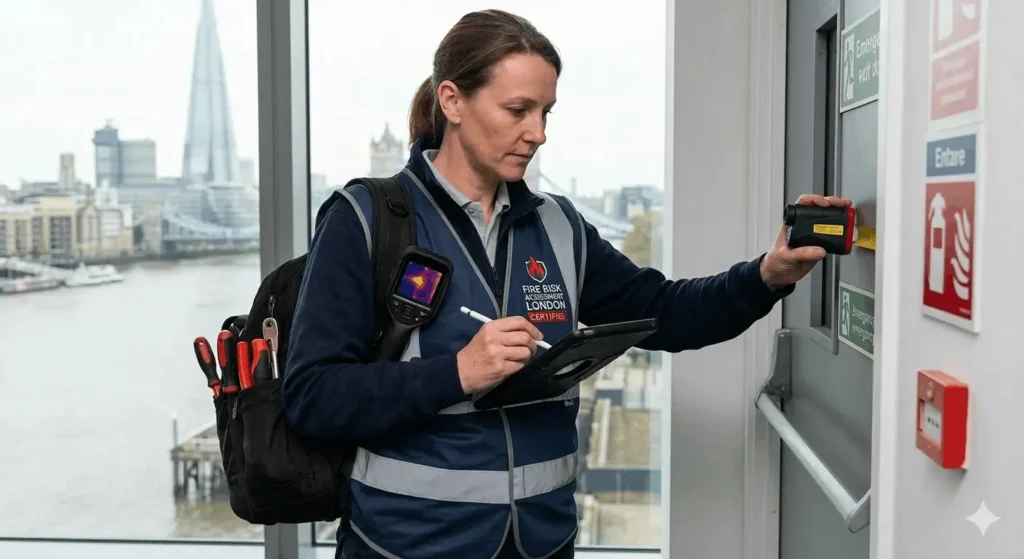
Keeping your business safe from fire should never feel like a hard or scary job. When you run a place in London or anywhere in the UK, fire safety is the best way to look after your team, your guests, and the things you have worked hard to build. Achieving Fire Assessment Compliance means following clear steps, so your building meets the law and stays ready for emergencies. It is not just about checking boxes. It is about making sure everyone can get out fast and that small risks do not turn into big fires.

Simple Five-Step Plan for Compliance
Many owners wonder where to begin. The path is good because it follows a straightforward five-step strategy that even a youngster may comprehend. These measures enable you to achieve Fire Assessment Compliance without any stress, whether your business is located in East London, Canary Wharf, or Covent Garden. Let’s go there together with basic language.
Step 1: Understand Your Responsibilities and Get Organised
The first move toward Fire Assessment Compliance is knowing who is the leader. In most cases, the responsible person is the owner, the manager, or the landlord. This person must make sure a fire check happens and stays fresh. You do not have to be a fire expert, but you must take the job seriously.
Assessing Your Building Layout and Usage
Start by looking at your building. Walk around and see the layout, how many people are there every day, and what they do. Think about when you are busy, and if you share the building with others, this happens a lot in London.
Understanding Legal Requirements
Search the newest guidelines. The primary law is the Regulatory Reform (Fire Safety) Order 2005. New developments like e-scooter batteries, disorganised exit routes, and great notes are getting close attention from inspectors in 2025 and 2026. They also wish to see that you have a strategy to assist those unable to move quickly. Early preparation avoids you problems later. You could want to phone an expert right away if your structure is very high or has huge kitchens. Many London businesses do this because experts know the city rules very well.
Step 2: Identify Fire Hazards – Look for What Could Start or Feed a Fire
This step is like cleaning your room but looking for dangers. Walk through every part of your building and find anything that could start or grow a fire.
Examples of Fire Hazards
Common hazards include:
- Broken power plugs or too many wires in one spot
- Heaters sitting too close to paper or cloth
- Cooking tools in kitchens or break rooms
- Piles of cardboard or old boxes
- Smoking near the doors
- Liquids or gases that catch fire easily
Hidden Risks in Buildings
Also, look for air. Fire loves oxygen, so check for open windows near sparks. In London, old buildings often have hidden risks like broken fire doors or narrow halls that have become full of stuff over the years. Take photos of what you see. Write it all down clearly. The goal is to see real dangers before they cause a fire. This honest look is the start of your Fire Assessment Compliance.
Step 3: Identify Who Could Be at Risk
Fires are dangerous for everyone, but some people are at higher risk. In this step, think about the real people in your building.
Special Considerations for High-Risk Individuals
In busy London spots, you might have many people during rush hour. If you share a building, think about your neighbours too. New rules in 2026 say you must have special plans for people who need help getting out. These are called person-centred plans. Understanding your people helps you pick better alarms and clearer signs. It shows you care and makes your Fire Assessment Compliance much stronger.
Step 4: Evaluate the Risks, Then Remove or Reduce Them
Now it is time to take action. For every risk you found, ask: How likely is a fire? And how bad would it be?
Practical Actions to Reduce Risk
Then, do these things:
- Remove it: Fix the broken wires or move the boxes away from the heater.
- Reduce it: Put covers on plugs and keep the rooms clean every day.
- Protect: Add smoke alarms, fire extinguishers, and emergency lights.
Ensuring Safe Exit Routes and Equipment
Check your exit paths. Are they clear and bright? Do the fire doors close all the way? In old London buildings, small fixes like this make a huge difference. You should also have tools to fight a small fire if it is safe to do so. Make sure your extinguishers are the right type and work well. Train your staff so they know what to do when they hear the alarm. Write down every choice you make. This proves you are working on Fire Assessment Compliance if an inspector visits.
Step 5: Record, Plan, Train, and Review Regularly
Write everything down in a clear report. Include:
- The hazards you found
- Who might get hurt
- The fixes you finished
- The emergency plan (where to meet and who to call for help)
- Notes on staff training
Importance of Training and Fire Drills
Keep this document securely. Many companies keep both a paper copy and a digital one. Post unambiguous notices instructing people what to do in case of a fire. once or twice a year to keep everyone calm by means of fire drills.
Regular Review and Updates
The last part is very important: you must review. A fire check is not a one-and-done job. Look at it again every year, or sooner if:
- You move walls or change how you use the building
- You get new staff or new machines
- A near-miss or small fire happens
- The law changes (like it did in 2025–2026)
Checking often keeps your Fire Assessment Compliance working. In London, things move fast, and checking your plan stops small gaps from becoming big dangers.
Extra Tips for London Businesses
London is a special city. Tall buildings and shared spaces add extra layers of risk. Talking to your neighbours is a must. Recent rules want better checks on the outside walls of some buildings. If your building has people sleeping inside or is very busy, professional help is a great idea. Many companies find that Fire Assessment Compliance actually saves money by lowering insurance costs and keeping workers happy.
Common Pitfalls to Avoid
- Using a quick online form instead of walking through the building
- Forgetting to update the plan after you buy new stock
- Skipping fire drills or staff training
- Poor notes, inspectors want to see what you actually did
- Using an expert who does not know the 2026 rules
Getting Help and Taking the Next Step
If your business is very small and simple, you can do the check yourself. But for most London buildings, hiring a pro makes life much easier. They give you a report that insurance companies and inspectors like to see. Look for experts who explain things in simple English and help you every year. The cost is small compared to the cost of a fire or a fine.
Start Taking Action Today
Start today. Walk through your building with fresh eyes or call a trusted expert. Small steps lead to strong Fire Assessment Compliance.
Wrapping Up: Safety Is an Ongoing Journey
Achieving Fire Assessment Compliance is a journey of looking, thinking, acting, and checking. By following these five steps, you protect lives and your business. Your team and your customers deserve to feel safe. And you deserve to feel calm knowing you have done the right thing. Take the first step this week. Stay compliant, stay ready, and keep your London business growing safely for years to come.