

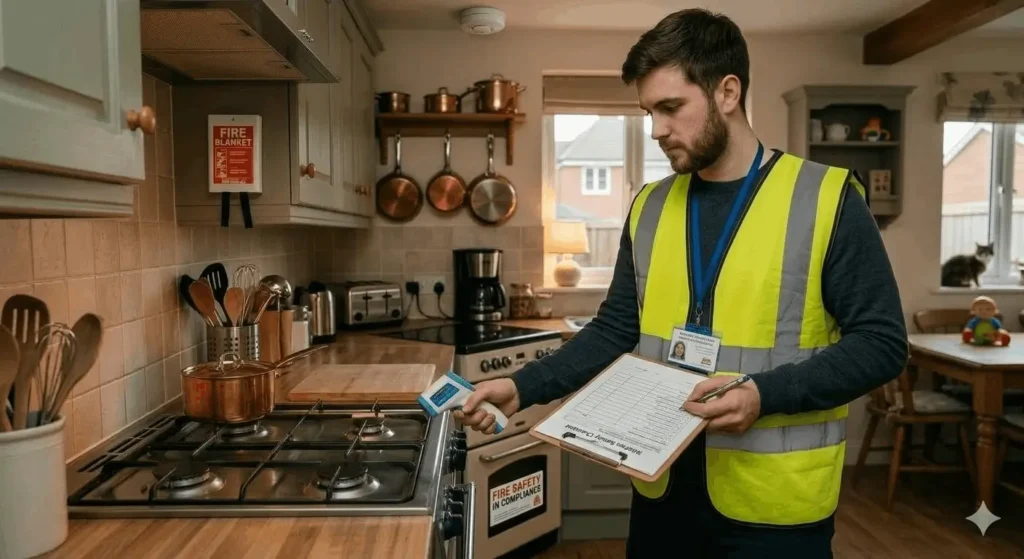
Your home is where you should feel the safest. Still, safety is not created by chance. It calls for careful observation of your environment to expose concealed hazards. Many homes in a busy metropolis are either ancient or next to one another. This increases the need for fire safety even further. Regular Fire Risk Assessment inspections are necessary to safeguard your family and your house.
This examination is a thorough, step-by-step examination of your house. It shows you how to repair anything that might cause a fire as well as helps you discover any potential spark-related stuff. Following a strict schedule will guarantee your house stays safe for all.
Phase 1: Kitchen Safety Check
A fire most usually begins in a house in the kitchen. Cooking appliances or electrical tools cause most of these fires. Spend considerable time in the kitchen during your fire risk assessment inspection.
These risks need examination:
- Examine the fan over the stove as well as its oil. Fire can catch easily in heavy grease.
- Toasters and Crumbles: Examine your toaster. Old crumbs can catch fire if they accumulate inside.
- Keep paper bags, oven mitts, and towels well away from the stove.
- Long sleeves or scarves should be avoided while cooking above a fire.
- Stopping a fire before it starts starts with keeping your kitchen neat and organised.
Phase 2: Looking at Electrical Wires and Plugs
Although electricity enables us to accomplish many tasks, damaged wires might prove hazardous. Looking at every plug and cable in your house is a major component of a Fire Risk Assessment Inspection.
These safety suggestions should be followed:
- Find fraying wires and replace any cable that is torn or exposes the metal within.
- Overloading outlets: Avoid packing a power strip with too many devices. This could burn the cables.
- Under rugs check: Never hide electrical cables beneath rugs or carpets. Walking on them could set fire by cutting the cords.
- Contact an expert if a plug is burned and brown or feels hot; stop employing it.
Phase 3: Testing Your Smoke Detectors
When you are asleep, you cannot always detect smoke. Smoke alarms are small guardians that keep an eye on your home while you sleep. An inspection of every alert on every level is part of a complete Fire Risk Assessment Inspection.
You ought to:
- When you push the test button, you ought to hear a very loud beep.
- Replace the Batteries: Should your alarm chirp or have a faint sound, promptly insert fresh ones.
- Look at the Date: Ten years is the usual lifespan of most smoke detectors. You should get a fresh one if yours is older.
- Wipe away dust from the sensors with a gentle cloth so that the alarm can readily smell fire.
- A functional alarm tells you the time you have left to go outdoors safely.
Phase 4: Removing your escape routes.
You have to flee the house very rapidly if a fire breaks out. In the dark or in thick smoke, you could have to move. Your Fire Risk Assessment Inspection will let nothing block your progress.
You have to look at these parts:
- Stairways and Corridors: Make sure no shoes, toys, or boxes could trip you up.
- Exit Doors: You need to be able to readily open every door. The key ought to be in a location everybody can locate if you keep it locked.
- Windows should open broadly, so verify this. Should you possess security bars, they should be able to open from the inside.
Phase 5: Managing Heaters and Candles
In the winter, many people use portable heaters to stay warm. Others like to light candles for a nice smell. Both of these things can be dangerous if you are not careful. Your Fire Risk Assessment Inspection should look at how you use heat in your rooms.
Phase 6: Protecting the People You Love
A good plan thinks about everyone in the home. Some people, like small children or elderly relatives, might need help during an emergency. Your Fire Risk Assessment Inspection should include a talk with your whole family.
You should decide:
- Who Helps the Children: Pick one adult to be in charge of getting the kids out.
- The Meeting Point: Choose a safe spot outside, like a specific tree or a lamp post, where everyone meets.
- Calling for Help: Make sure everyone knows how to call the emergency services once they are safe.
Phase 7: Building a Nightly Safety Habit
Many fires happen at night. You can make your home safer by doing a small check before you go to bed. You can add this routine to your Fire Risk Assessment Inspection notes.
Establishing a consistent nightly schedule that lowers fire hazards will help you keep a secure home setting. Start by closing every internal door across the house; this simple act substantially reduces the spread of fire and smoke, so maintaining the cleanliness of bedrooms in an emergency.
Unplug every electronic charger before going to bed; never leave tablets or phones charging on your bed or beneath your pillow, where they might quickly overheat. Last, inspect your kitchen to make sure the oven and the stove are entirely off, therefore providing you peace of mind all night.
Phase 8: Updating Your Assessment Every Year
Your home changes over time. You might buy a new TV, move your bed, or paint a room. Because things change, your Fire Risk Assessment Inspection should happen at least once every year.
Conclusion
Keeping your house safe is easy and successful with a Fire Risk Assessment Inspection. Finding dangers and using your equipment helps you to safeguard the people you cherish the most. Every day, you choose fire safety to be ready and cautious.
Safety should not wait on a fire to begin. Walk around your home today and hunt for dangers. A thorough inspection assures you that your house is a really safe environment for your family to live and develop.